

Hair Porosity and Your Scalp: Why One Routine Doesn't Work for Everyone
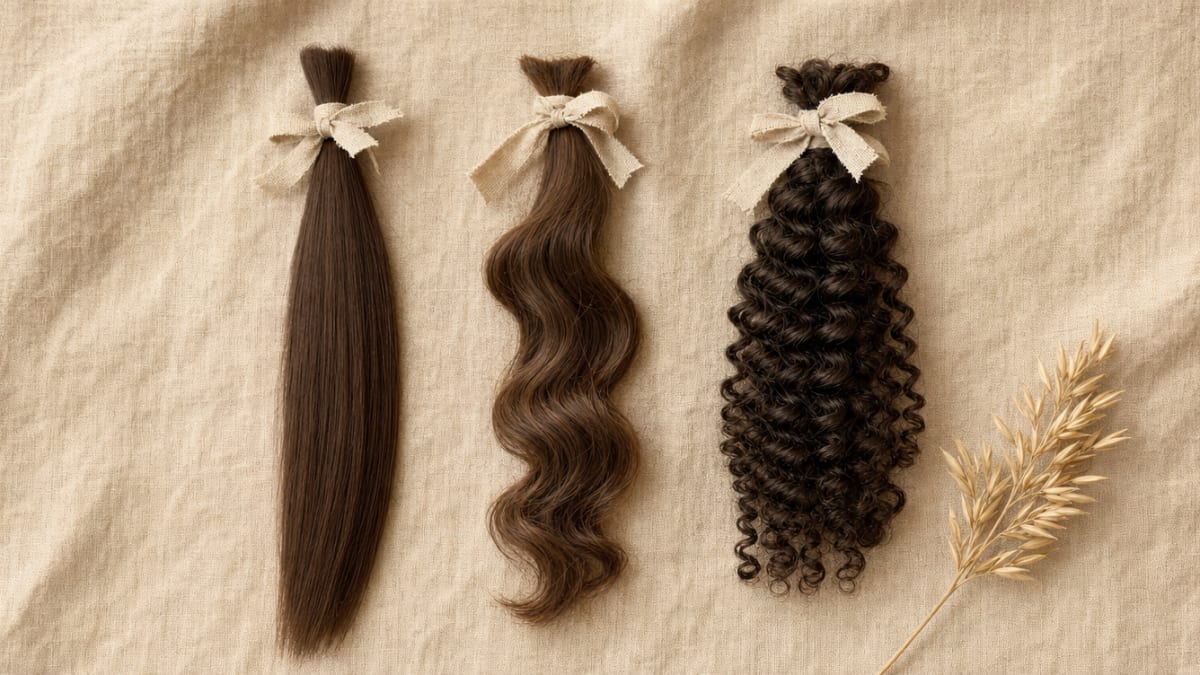
Porosity is one of the most talked-about concepts in hair care, and one of the most misunderstood.
The internet has turned it into a classification system, a personality quiz, a reason to overhaul your entire routine. In reality, porosity describes something simple: how easily water and product move in and out of your hair shaft. That's it. Once you understand what's actually happening at the cuticle level, the endless categorization starts to feel less necessary, and the routine adjustments become obvious.
What Porosity Is (and What It Isn't)
Porosity is a measurement of how your hair cuticle manages water and product. The cuticle is the outermost layer of the hair shaft, made up of flat overlapping cells arranged like shingles on a roof, running from root to tip. These cells sit at a slight angle, and how tightly or loosely they lie against the shaft determines porosity.
When those scales lie flat and tight, water and product have difficulty getting past them. That's low porosity. When the scales are raised or damaged, moisture enters easily, but escapes just as fast. That's high porosity. Medium porosity sits in between, with scales in a balanced state that allows reasonable absorption and retention.
It's worth being specific about what porosity does not predict:
- It doesn't indicate hair health on its own. Low-porosity hair can be completely undamaged. High-porosity hair can result from genetics, not just damage.
- It doesn't tell you your curl pattern or texture. Porosity describes how well your hair absorbs and holds moisture.
- It isn't fixed forever. Damage from bleach, heat, or UV exposure raises porosity. New growth will have your natural porosity, but existing damage doesn't reverse.
Genetics vs. Damage: Two Ways to Get Each Porosity Level
There are two separate reasons you might end up at any porosity level, and they call for different responses.
Natural (genetic) porosity
Your base porosity is partly determined by genetics. Some people are born with naturally tighter cuticles; others have cuticles with a slightly more open structure by default. Neither is a defect. Natural porosity is simply how your hair shaft developed.
Acquired porosity from damage
Chemical services, bleach in particular, raise porosity by lifting, chipping, or partially dissolving the cuticle layer. Research published in Applied Microscopy (2024) found that in severely bleached hair, the entire cuticle layer was sometimes missing, exposing the cortex beneath. The mechanism is straightforward: oxidizing agents break disulfide bonds in the cortex and disrupt the cuticle's protective lipid layer.
UV exposure and repeated heat styling have similar effects, though less dramatic. The cuticle scales gradually lift and weaken with cumulative exposure.
The cuticle of a single hair strand is made up of about 6 to 10 flat, overlapping cells, with a layer called the cell membrane complex (CMC) between them. Microdiffraction work has shown the CMC swells measurably under water sorption, demonstrating that this layer is structurally responsive rather than inert. Heat, bleach and other chemical processes can damage the cuticle and raise porosity over time, which is part of why damaged hair behaves as higher-porosity hair.
Why "fixing" porosity is the wrong framing
Protein treatments can temporarily fill in damaged areas of the cuticle, but the effect is temporary because it rinses out with washing, and hair cannot be biologically repaired. New growth comes in at your natural porosity. The strands that were bleached will remain high-porosity until they are cut. Understanding this matters because it shifts the goal: instead of trying to change porosity, the question becomes how to manage where your hair is right now.
How to Test Your Own Porosity (The Right Way)
The most widely recommended test involves dropping a clean strand of hair into a glass of water and watching whether it sinks or floats. This is a poor test. Beauty science writer Michelle Wong (Lab Muffin Beauty Science) explains that tests like this one mostly check for damage to the surface of the hair rather than measuring porosity directly, and that something as simple as lots of oil on your hair can skew the result.
Behavioral observation is more reliable. Try these instead:
Test 1: Product absorption rate
Apply a small amount of water-based leave-in or conditioner to clean, damp hair. Watch how long it takes to absorb. Low porosity: product sits on the surface for a while and may bead up. High porosity: product soaks in quickly, and hair may look dry again soon after.
Test 2: Air-dry time
Wash your hair and let it air-dry without any product. Low porosity hair takes a long time to dry, because the sealed cuticle holds water in the same way it keeps product out. High porosity hair dries quickly because water exits as easily as it enters.
Test 3: Behavior after cleansing
Right after rinsing out conditioner, observe whether water beads on the hair surface or seems to absorb immediately. Beading may point to low porosity, and immediate absorption may point to higher porosity, although tests like this do not measure porosity directly.
These tests work best on hair that hasn't been heavily styled or product-coated. Run them on a wash day before applying anything beyond your cleanser and conditioner.
Scalp Implications You May Not Realize
Porosity is usually discussed in terms of the hair shaft. But the state of your hair often reflects the state of the scalp environment that produced it, and the two require separate attention.
High porosity and scalp stress
If your hair is high porosity because of chemical services or heat damage, the scalp has often been through the same stressors. Bleaching, for instance, affects the shaft and can also irritate the scalp skin, because bleaching chemicals can cause scalp irritation and contact dermatitis. Your scalp care routine should account for this. Clarifying removes product buildup, which can leave follicles inflamed when it collects on the scalp, but harsh sulfate cleansers can strip an already sensitized scalp. Look for a balance.
Low porosity and product buildup on the scalp
Low-porosity hair doesn't absorb products readily. Products that don't soak into the shaft can end up sitting on the hair, and hair products, oil and dead skin cells can build up on the scalp. This is the less obvious connection: if you're using heavy leave-ins, oils, or conditioners and your hair is low porosity, you may be dealing with scalp buildup even if your hair feels fine. Regular clarifying, not just frequent washing, is often the fix.
"Porosity is a variable, not a personality type. The question I ask clients isn't what their porosity is, it's whether their current routine matches their current cuticle state. Most people have never checked."
Tina Mui, Certified Trichologist
Scalp health is separate from shaft porosity
Your follicle and scalp function largely independent of your shaft's porosity level. A healthy scalp with strong sebum production can underlie either low or high porosity hair. What changes is how your topical products should interact with the shaft. Scalp care addresses the follicle; porosity-aware product selection addresses the strand. The two conversations shouldn't be collapsed into one.
If you notice scalp concerns alongside porosity-related hair issues, read more about why hair loss happens and how the scalp environment contributes to long-term hair quality.
Routine Adjustments by Porosity
Low porosity: the goal is getting moisture in
- Rinse with lukewarm water. Lukewarm water is a gentle choice, and very hot water is best avoided.
- Choose lightweight products. Heavy butters and oils sit on the surface of low-porosity hair without absorbing. Lightweight humectants like glycerin and hyaluronic acid work better.
- Clarify regularly. Because products don't absorb, they accumulate. A clarifying shampoo every two to four weeks prevents the buildup that can weigh hair down and cause scalp issues.
- Apply conditioner to damp, not wet, hair. Very wet hair is already saturated. Slightly damp hair allows better conditioner contact with the shaft.
Medium porosity: maintain what's working
Standard protocols work for medium-porosity hair. The main task is maintenance: don't introduce unnecessary damage through overprocessing, excessive heat, or extended UV exposure that could push porosity higher over time. Focus on the scalp and follicle environment; the shaft is already in a good place.
High porosity: seal what you put in
- Use protein on a rotation, not every wash. Protein can temporarily fill gaps in the cuticle, and the effect fades as it washes out.
- Apply oils or butters after water-based products. High-porosity hair loses moisture as fast as it absorbs it. A light sealing step, applying a small amount of oil over a damp leave-in, can add moisture to high-porosity hair; Healthline notes butters and oils help moisturize it.
- Reduce heat styling frequency. The cuticle damage from heat is cumulative. If your hair is already high porosity from previous damage or bleach, each heat session adds more.
Product Selection Framework
A few ingredients behave consistently across all porosity types; others require consideration based on where your hair falls on the spectrum.
| Ingredient Category | Works For Low | Works For Medium | Works For High | Notes |
|---|---|---|---|---|
| Humectants (glycerin, hyaluronic acid) | Yes | Yes | Yes | Draw moisture from air into the shaft; effective across all types |
| Lightweight oils (argan, jojoba) | Use lightly | Yes | Use as sealer | Low porosity: use lightly, since oils penetrate low-porosity hair poorly; High: apply over leave-in |
| Heavy oils and butters (shea, castor) | Avoid | Moderate use | As sealing step only | Penetrate low-porosity hair poorly, which can add to buildup |
| Protein treatments (keratin, hydrolyzed wheat) | Use sparingly | Occasionally | Every 2-4 weeks | The effect is temporary and fades with shampooing; Healthline suggests protein-free conditioners for low porosity hair |
| Clarifying shampoo | Every 2-4 weeks | Monthly | As needed | More critical for low porosity to clear buildup; high porosity: avoid overuse |
When to rethink your porosity category
Porosity isn't fixed. If you've had a significant chemical service, used heat styling heavily for an extended period, or spent a lot of time in sun or chlorine, your porosity may have shifted. Run the behavioral tests again every six months, or after any major service. The adjustments are simple once you know where you are now.
Frequently Asked Questions
How do I know my hair porosity?
Skip the float test. Instead, observe how your hair behaves: how quickly does a water-based product absorb after application? How fast does your hair air-dry? Low porosity hair takes a while to absorb product and dries slowly. High porosity hair absorbs product quickly and dries quickly. These behavioral tests are more informative than any glass of water.
Can you change your hair porosity?
You cannot permanently alter porosity. Natural porosity is partly genetic and set by your cuticle structure. Damage from bleach, heat, or UV exposure raises porosity, and that change is irreversible in those strands. New growth will have your natural porosity. Protein treatments can temporarily fill in damaged areas of the cuticle, but hair cannot be biologically repaired.
Is the water float test for porosity accurate?
No. Michelle Wong of Lab Muffin Beauty Science explains that tests like this one mostly check for damage to the surface of the hair rather than measuring porosity directly. Behavioral observation, product absorption rate and air-dry time, is more reliable.
Does low porosity mean unhealthy hair?
Not at all. Low porosity is often a sign of undamaged hair with a tightly sealed cuticle, which is structurally healthy. The challenge is getting moisture in, not keeping it out. Warm water, lightweight products, and regular clarifying to prevent buildup address that challenge without treating low porosity as a problem to fix.
Why does my hair take so long to dry?
Slow drying is one of the clearest signals of low porosity. The tightly sealed cuticle that prevents product from soaking in also slows the release of water. High-porosity hair does the opposite: it absorbs water fast and releases it fast. If your hair dries slowly, focus on lightweight humectants and occasional clarifying rather than heavy deep conditioning that can build up further.
References
- Mitchell, A. (n.d.). Hair Structure. Anna Mitchell Trichology Clinic. annamitchelltrichologyclinic.co.uk
- Kim, D.H., Oh, S.H., Chang, B.S. (2024). Effects of excessive bleaching on hair: comparative analysis of external morphology and internal microstructure. Applied Microscopy. PMC11652465
- Kreplak, L., Mérigoux, C., Briki, F., Flot, D., Doucet, J. (2001). Investigation of human hair cuticle structure by microdiffraction: direct observation of cell membrane complex swelling. Biochimica et Biophysica Acta, 1547(2), 268-274. PubMed 11410283
- Wong, M. (Lab Muffin Beauty Science). Hair porosity tests are a lie. labmuffin.com
- OrganiGrow Hair Co. Proteins and How They Affect Different Hair Porosities. theorganibrands.com
